How the Powerball number generator works
This template operates as a comprehensive analysis and generation tool within a single sheet. It leverages Python code to process nearly 1,900 historical draws, ensuring that data flows unidirectionally from history tables to frequency analysis cells.
- Feeds statistical insights directly into an interactive generator cell.
- Updates visualizations automatically based on calculated frequencies.
Historical data foundation
The source data is located in the Historical_Powerball_Winning_Numbers table (J1:L1897). This dataset contains approximately 1,895 historical draw records, storing draw dates and winning number strings consisting of five main numbers plus the Powerball. It also includes historical multiplier values for each draw.
Statistical analysis components
Frequency calculations
The template uses specific Python cells to break down the historical data. The Main_Number_Frequencies cell parses strings to count numbers 1-69, while the Powerball_Frequencies cell analyzes the specific sixth number (1-26). Additionally, the Multiplier_Frequencies cell aggregates occurrence rates of multipliers ranging from 2x to 10x. All outputs are sorted by descending frequency percentages.
Pattern recognition
To identify deeper trends, the Position_Frequencies cell identifies numbers appearing most often in specific slots. The Hot_Cold_Numbers cell categorizes numbers based on high versus low occurrence, synthesizing data to determine "due" numbers versus frequent winners, a process akin to predictive analytics and modeling.
Using the Random Powerball number generator
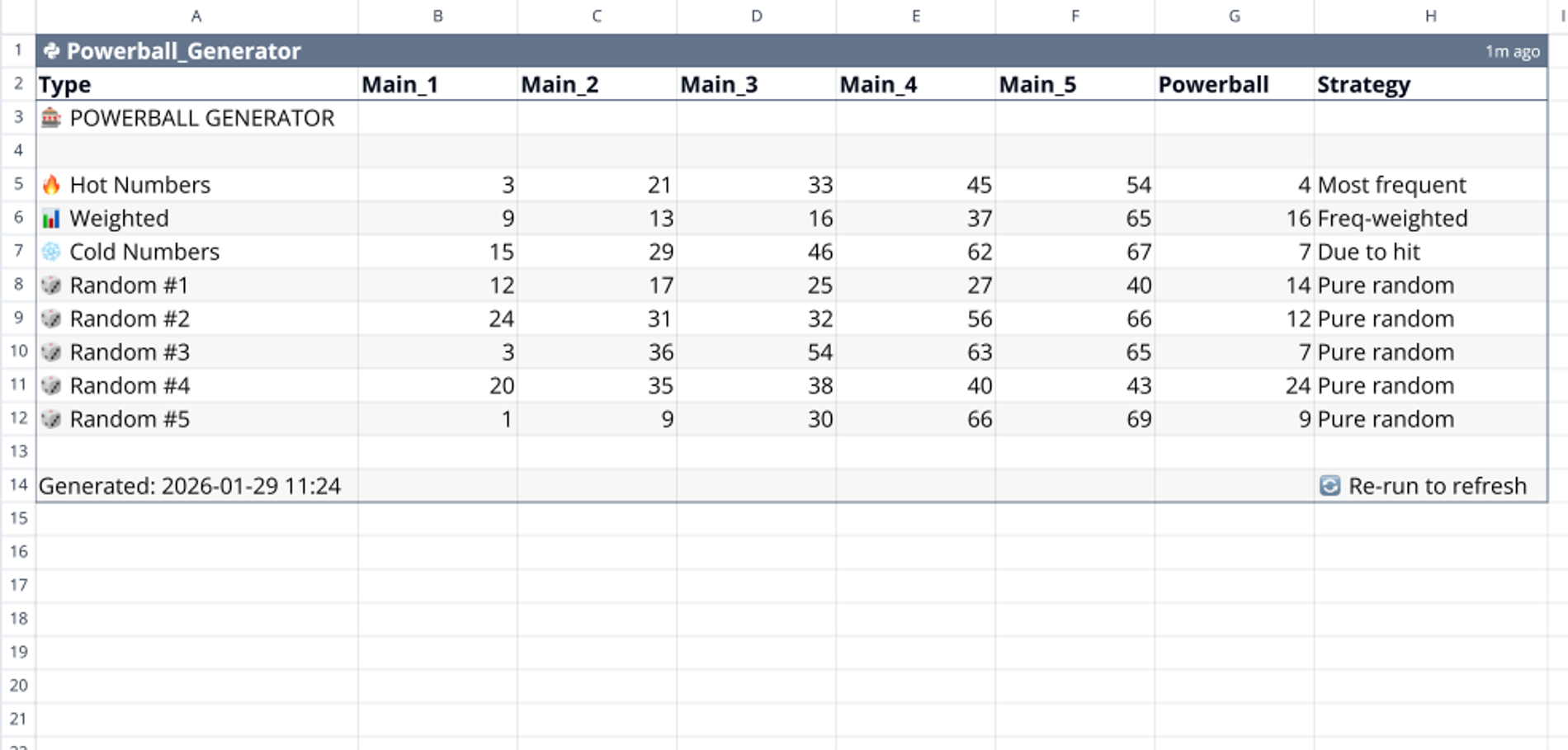
The interactive interface is located in cell range A1:H14. It references the calculated frequency data to build combinations based on specific user-selected strategies. Re-running the cell produces fresh combinations instantly.
- Strategy 1: Selects combinations exclusively from "hot" numbers.
- Strategy 2: Applies frequency-weighted random sampling.
- Strategy 3: Targets "cold" numbers presumed due for selection.
- Strategy 4: Acts as a pure Random lottery number generator for Powerball.
Visualizing frequency distributions
Three distinct Plotly charts are located in rows 75-97 to provide immediate visual context for the statistical analysis.
- Main_Numbers_Chart: Visualizes the distribution of numbers 1-69.
- Powerball_Chart: Displays frequency of the red Powerball numbers.
- Multiplier_Chart: Shows the probability spread of multiplier values.
Who this Powerball number generator is for
- Lottery players seeking data-backed selection methods.
- Statisticians analyzing probability distributions in gaming.
- Python users interested in string parsing and frequency analysis might benefit from a python template for getting started.
- Data enthusiasts visualizing historical datasets often rely on python libraries for data visualization.
Use Quadratic to do Powerball number generation and statistical analysis
- Process nearly 1,900 historical Powerball draws with native Python.
- Automate frequency calculations for main numbers, Powerball, and multipliers.
- Uncover number patterns and identify "hot" or "cold" numbers based on historical data.
- Generate Powerball combinations instantly using various data-backed strategies.
- Visualize number and multiplier frequency distributions with embedded Plotly charts.
Related templates
Random Choice Generator
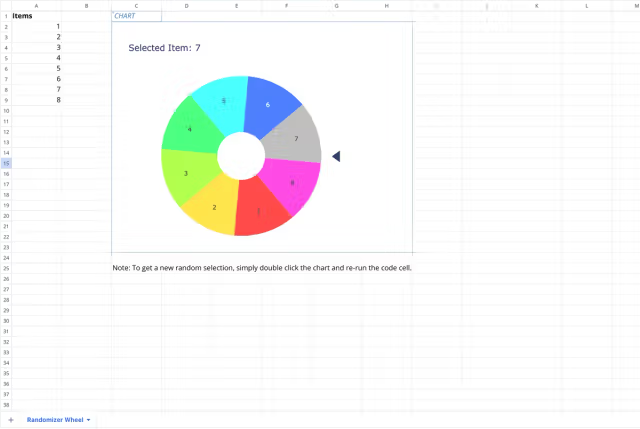
Randomize an unlimited list of words or numbers with a Python-powered interactive wheel.
Free Bet Blackjack Simulator
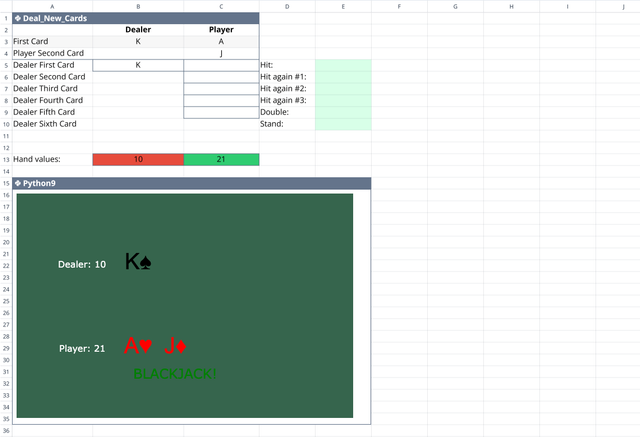
A hands-on way to understand card values, practice decision-making, and visualize game outcomes.
Loot Drop Chance Calculator
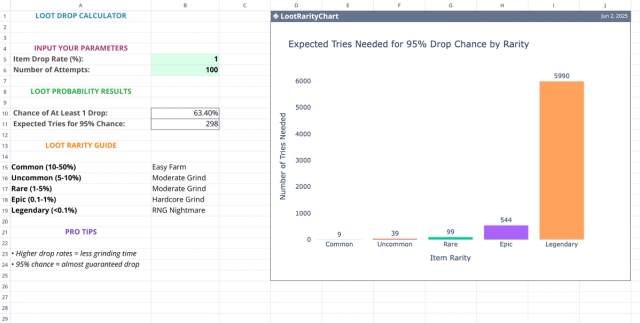
Compute the probability of rare item drops in your game.
